Same Names, Same Results: The NFL's Broken Coaching Recycling Machine
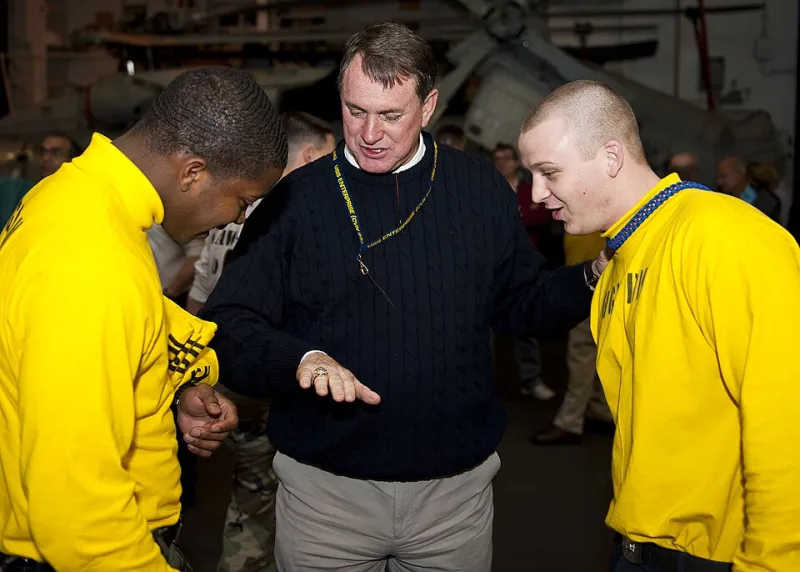
Photo: U.S. Navy photo by Mass Communication Specialist 3rd Class Scott Pittman, Public domain, via Wikimedia Commons
Somewhere right now, a fired NFL head coach is sitting courtside at a college basketball game, doing TV hits, and quietly letting his agent work the phones. He went 22-43 over three seasons, got let go with two years left on his deal, and collected a check the size of a small country's GDP on the way out the door. And in about eighteen months? He'll be back. New city, new press conference, same guy.
This is the NFL coaching carousel, and it is absolutely, magnificently broken.
The Comfort of the Familiar
Here's the thing nobody in a front office wants to admit out loud: hiring a retread is the safe play — for the general manager, not the team. When you bring in a guy who's run a franchise before, you've got cover. He has a track record. He's been around the league. The owner knew his name before the interview. If it goes sideways, hey, you gave a proven guy a shot. What more could you do?
Hiring an unknown offensive coordinator from a mid-level program? That takes guts. That takes conviction. And in a league where GMs are also fighting for their jobs, conviction is a luxury most of them can't afford.
So the cycle perpetuates. The familiar names get recycled. The bold picks get deferred. And fans wonder why their team looks like it's running the same stale system it ran five years ago — because, in a lot of cases, it literally is.
Failing Upward: A Brief Tour
Let's not pretend this is abstract. The NFL has handed out second and third head coaching gigs with a kind of casual generosity that would make a HR department sweat.
Coaches have bounced from one struggling franchise to another, carrying the same offensive philosophies that got them fired in the first place. Some have parlayed a single winning season — sandwiched between two disasters — into a reputation that follows them for a decade. The league has a short memory for failure and a long one for brand recognition.
The pattern isn't hard to spot. Coach gets fired. Coach spends a year or two as an analyst or a consultant or a vague "senior advisor" for some other team. Coach gives a few interviews about what he "learned" from the experience. Coach gets hired again. Rinse. Repeat.
The Coordinators Sitting in the Waiting Room
While all of this is happening, there's a whole tier of coaches who are doing the actual work and getting none of the credit.
Offensive coordinators who've developed multiple Pro Bowl quarterbacks. Defensive coordinators who've built top-ten units out of bargain-bin rosters. Special teams coaches who've flipped field position battles week after week. These guys exist. They're not hard to find. And yet, when a head coaching vacancy opens up, the first calls often go to the guys who've already had the job — not the ones who've been quietly earning it.
Part of this is the interview process itself. A candidate who's run a press conference before knows how to run a press conference. He knows what to say to an owner. He's polished in a way that a first-time coordinator sometimes isn't. And in a league where perception matters as much as production, that polish carries real weight.
But polish isn't a game plan. And charm doesn't win in January.
What Front Offices Are Actually Afraid Of
If you strip away all the scouting language and the organizational buzzwords, what you're left with is fear. NFL front offices are afraid of being wrong in a visible, undeniable way. Hiring a retreaded head coach distributes the blame. If he fails again, well, he failed before too — it's almost expected. If a first-time hire flames out, that's on the GM who took the swing.
The incentive structure basically punishes bold decision-making. Which is wild, when you think about it, for a league that celebrates bold decision-making on the field every single Sunday.
Is There a Fix?
Honestly? Maybe not a clean one. The NFL doesn't have a mandatory interview requirement for minority candidates at the coordinator level the way it does at the head coaching level, and even the existing Rooney Rule has had mixed results in terms of actual outcomes. Structural changes can open doors, but they can't force anyone to walk through them with real intention.
What might actually move the needle is ownership accountability. When an owner has cycled through four head coaches in six years, that's a front office problem, not a coaching market problem. The instability at the top filters down and makes it nearly impossible for any coach — retread or rookie — to build something lasting.
The teams that have gotten this right — the ones with sustained success over long periods — tend to share one thing in common: stable ownership that lets football people make football decisions and doesn't panic after a six-win season. That's not a revolutionary insight. It's just really, really hard to actually do.
The Bottom Line
The coaching carousel doesn't keep spinning because there aren't better options out there. It keeps spinning because the system rewards familiarity over merit, and because the people making the decisions have their own job security to think about.
Somewhere right now, the next great NFL head coach is drawing up a third-and-medium concept for a team that's going to fire its current coach after Thanksgiving. He's not getting a call. But the guy who went 6-11 in Arizona three years ago? His agent's already in the building.
That's not a talent problem. That's a courage problem. And until enough franchises are willing to actually solve it, we'll keep watching the same tired names walk up to the same podiums and promise the same fresh starts.