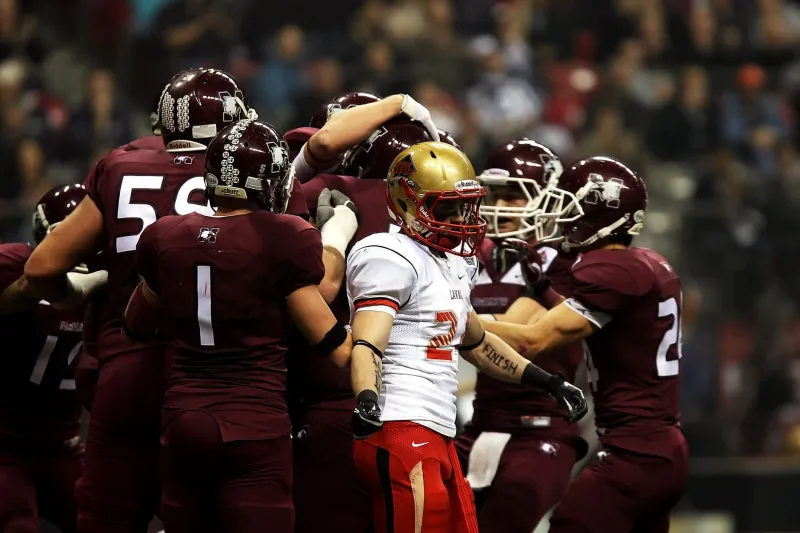
Say It Louder for the Losers in the Back: The 'Culture' Speech Nobody in the Locker Room Believes

Every struggling franchise has a version of the same press conference. New coach, new GM, same buzzwords. "We're building a winning culture here." Players hear it, nod politely, and go right back to updating their trade request lists.
Here's the thing nobody wants to say out loud: the teams that talk about winning culture the most are almost always the ones that have the least of it. It's not a coincidence. It's a symptom.
What 'Culture' Actually Means When a Front Office Says It
Winning culture is one of those phrases that sounds meaningful until you try to define it. Ask ten different executives what it means and you'll get ten different non-answers. Accountability. Buy-in. Standards. Process. It's corporate-speak dressed up in shoulder pads, and the players see through it immediately.
Real culture — the kind that actually produces wins — doesn't need a press conference. It shows up in how a franchise handles a 4th-quarter collapse on a Monday night. It shows up in whether a veteran defensive end gets benched for missing a film session or whether the coaching staff quietly looks the other way because they need him healthy for Sunday. Culture is the gap between what an organization says it values and what it actually does when things get uncomfortable.
Franchises that have genuine winning cultures — your Patriots dynasties, your early-2000s Eagles, your recent Chiefs — don't spend a lot of time describing it. They're too busy living it. The teams putting out glossy content about "brotherhood" and "standard-setting" are usually the ones who just fired their third defensive coordinator in four years.
The Case Studies Write Themselves
You don't have to dig too hard to find examples. Think about any franchise that's cycled through three or four head coaches in a decade without meaningfully improving their win total. The script is almost always identical.
Step one: fire the previous coach for "failing to establish a culture." Step two: hire a new guy with a reputation for being a "culture builder" — usually someone who was a coordinator somewhere successful, whose culture was actually built by someone else. Step three: hold a press conference where the new hire talks about accountability, toughness, and setting a standard. Step four: watch the same organizational dysfunction reassert itself within eighteen months because the front office that created the problem is still running the building.
The Cleveland Browns spent the better part of a decade announcing new cultures. The Jacksonville Jaguars have practically trademarked the rebuild press conference. The Las Vegas Raiders have gone through so many "fresh starts" that the phrase has lost all grammatical meaning in that organization. The common thread in every case? The people doing the talking rarely had the authority — or the self-awareness — to actually fix what was broken underneath.
Players Know Before the Ink Dries on the Contract
Veteran players are culture detectives by necessity. They've been lied to enough times that they've developed a finely tuned radar for organizational phoniness. And they start reading the signals the moment they walk through the door for OTAs.
Is the weight room actually well-equipped or just well-photographed? Does the head coach know their name without glancing at a clipboard? When a player raises a concern, does it disappear into the void of a middle manager's inbox, or does it actually get addressed? These aren't abstract questions. They're the daily reality that tells a player whether the culture speech was real or just content for the team's social media channels.
Free agents talk. They compare notes. Word gets around the league about which organizations actually back up their messaging and which ones are essentially performing wellness theater while the front office feuds behind closed doors. The best players — the ones every rebuilding team desperately needs — have enough leverage to avoid the phonies. So those franchises end up signing the guys who couldn't get better offers, which only reinforces the dysfunction they were supposedly trying to fix.
The Accountability Illusion
One of the most reliable tells of a fake culture is selective accountability. In organizations that genuinely hold people to a standard, consequences are consistent regardless of contract size or draft pedigree. In organizations performing culture, accountability is reserved for the players who can't fight back.
The rookie who misses a blocking assignment gets publicly called out. The $20 million wide receiver who sulks through practices gets described as "working through some things." The front office executive who botched three straight drafts gets promoted to a newly created title that sounds important but carries no real responsibility. Everyone in that locker room notices. They notice every single time. And every time it happens, the culture speech gets a little less believable.
Real accountability is uncomfortable. It costs something. It means having the hard conversation with the guy who makes the locker room awkward, not just the guy who's easy to make an example of. The franchises that can do that consistently don't need to announce it. The ones that can't do it keep scheduling press conferences.
Stop Listening to What They Say
If you want to know whether an NFL organization actually has a winning culture, stop watching the introductory press conferences. Watch what happens in November when they're 4-6 and mathematically alive but realistically cooked. Watch how they handle the injury report. Watch who gets extended and who gets cut and whether there's any logical principle connecting those decisions.
Culture isn't a speech. It's not a slogan on a wall in the facility. It's not the documentary-style content the team posts during training camp. It's the accumulated weight of a thousand small decisions made when nobody's watching and nothing's easy.
The franchises that have figured that out don't need to tell you about it. The ones still figuring it out will keep holding press conferences until someone makes them stop.