Agents Are Cashing In While Their Clients Are Burning Out
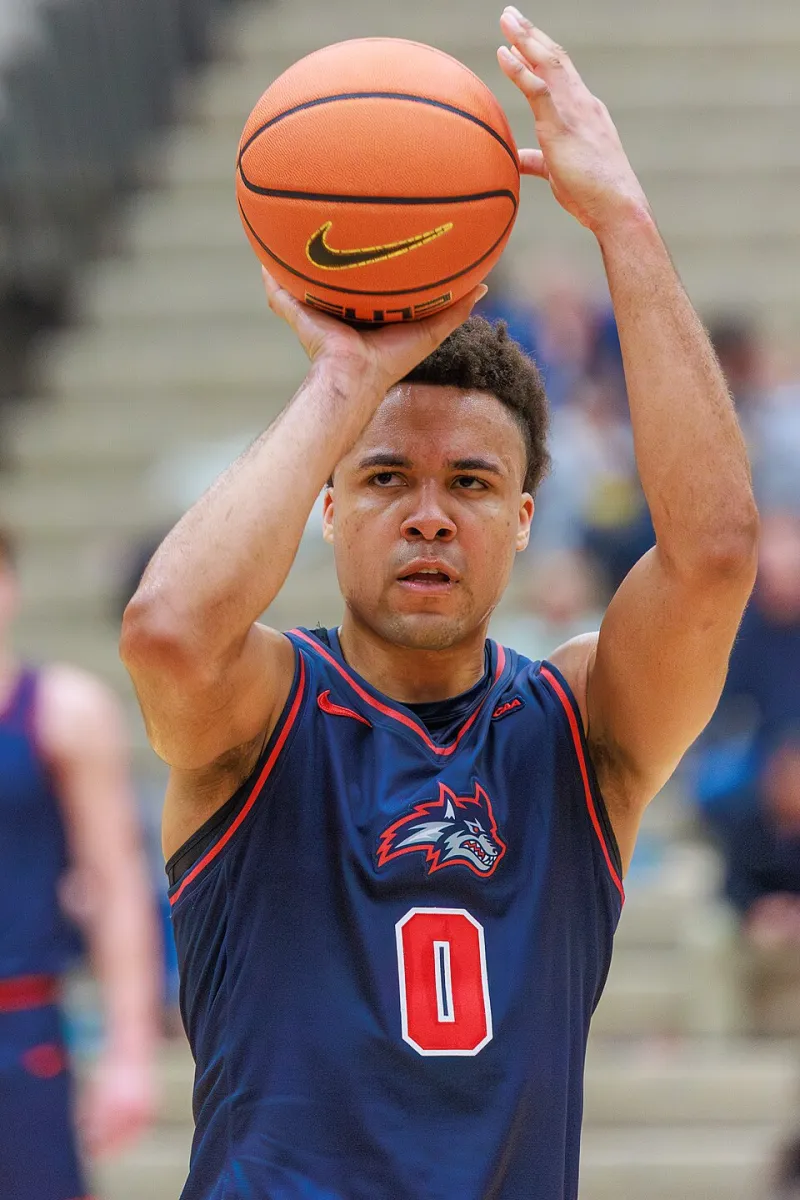
Photo: Kenneth C. Zirkel, CC BY 4.0, via Wikimedia Commons
Let's be straight about something the college basketball world doesn't love to say out loud: the transfer portal isn't just a second-chance mechanism anymore. For a lot of players, it's become a revolving door operated almost entirely by the people representing them — and those people have a very different definition of "winning" than the athletes do.
The portal was sold to us as player empowerment. Freedom of movement. A way for kids who landed in bad fits to find better situations. And sure, for some players, that's exactly what it delivered. But spend any time talking to coaches, scouts, or front office staffers, and a different story starts to emerge — one where agents are pushing clients into annual moves not because it helps the player grow, but because each new deal generates a fresh NIL contract, a new signing bonus, and another commission check.
How the Money Actually Flows
Here's the part that doesn't make the press release. When a player signs an NIL deal at a new school, their agent typically takes a cut — somewhere between 10 and 20 percent depending on the arrangement. That alone isn't scandalous. Agents need to eat too. The problem is what happens when that incentive structure starts driving roster decisions.
If a player has two years of eligibility left and is sitting comfortably at a mid-major program where they're developing under a coach who actually believes in them, the smart long-term play is often to stay put. Build chemistry. Refine their game. Let their stock rise organically. But if an agent can broker a portal move to a high-major school dangling a six-figure NIL package, the commission math suddenly looks a lot more attractive than the development math.
And so the call gets made. The narrative gets constructed — "this is a better opportunity," "you need a bigger stage," "scouts won't see you there" — and the player, who is usually 19 or 20 years old and not exactly swimming in financial literacy, trusts the person they've been told is in their corner.
The One-Year Wonder Problem
Scouts around the league have started tracking something quietly alarming: players who enter the portal multiple times are increasingly being flagged not just for fit concerns, but for coachability questions. When a prospect has bounced through three programs in three years, the natural question isn't "why did those schools fail him?" It's "what's driving this pattern?"
NBA front offices are pattern-recognition machines. They see a player who averaged 18 points at a mid-major, transferred to a power conference school, averaged 11 in a reduced role, then entered the portal again — and they don't see a diamond in the rough. They see someone whose development curve flatlined the moment comfort and continuity disappeared.
Take the general archetype that's become disturbingly common: a wing prospect with legitimate upside who, after a breakout sophomore season, gets steered into a portal move chasing NIL money and a bigger platform. Year three is an adjustment year. Year four is another transfer. By the time draft boards are being finalized, what was once a second-round projection has quietly become an undrafted free agent conversation.
No names here — these kids deserve better than being made examples of — but if you follow recruiting closely, you already know exactly who fits this mold. There are more of them every cycle.
The Coaches Aren't Blameless Either
To be fair, this isn't purely an agent problem. Coaches and programs participate in the dysfunction too. Schools throw NIL money at portal transfers they don't fully vet, creating situations where a player who needed stability and mentorship ends up in a high-pressure environment where the expectation is immediate production. When it doesn't work out — and it often doesn't — the player enters the portal again, the school moves on, and the agent starts the cycle over.
The incentive misalignment runs in every direction. Programs want quick fixes. Agents want commissions. And somewhere in the middle of all that, actual human development gets treated like an afterthought.
What Needs to Change
The NCAA has been about as effective at regulating agent influence as a crossing guard at the Indy 500. The rules exist on paper, but enforcement is a different story entirely. If the system is going to work for players — actually work, not just theoretically empower them — there needs to be some form of structural accountability for representatives who are demonstrably steering clients into decisions that hurt long-term outcomes.
Some programs are starting to build internal advisory structures specifically to help players think through portal decisions without exclusively relying on outside representation. That's a start. A few conferences are exploring disclosure requirements around agent relationships. Also a start.
But until the financial incentives get realigned — until agents have some skin in the game beyond the next deal — the portal will keep producing a generation of players who burned bright for one season and then quietly disappeared from the conversation.
The agents will be fine. They always are. The question is whether the players will be.